Home Textile MOQ Checklist for Small Importers

A practical checklist for small importers to evaluate supplier minimum order quantities before placing orders. It covers cost structure, production lead times, quality controls, and contract terms. Use this guide to identify red flags, negotiate better terms, and avoid costly mistakes during import planning.
- Minimum order quantity is not just a number, but a reflection of the supplier's production capacity, tooling needs, and risk tolerance.
- Always break down the cost structure to see how the minimum order quantity affects unit pricing and hidden fees.
- Negotiate terms that align with your import planning, such as partial shipments or phased production runs.
- Use the checklist to identify red flags in quality control, lead times, and contract flexibility.
Why the Minimum Order Quantity Number Is Not the Whole Story
The minimum order quantity (MOQ) printed on a supplier’s quote is often just the starting point. It does not tell you the full cost of entry, the production constraints, or the negotiation room available. For small importers, a low MOQ can mask high per-unit costs, while a high MOQ might be negotiable if it unlocks better terms.
Before placing an order, treat the MOQ as a variable to be tested, not a fixed rule. The checklist below breaks down the criteria that determine whether a supplier’s minimum order quantity is workable for your business. It groups these criteria into practical themes, with explanations and red flags to watch for.
1. Production and Tooling Constraints
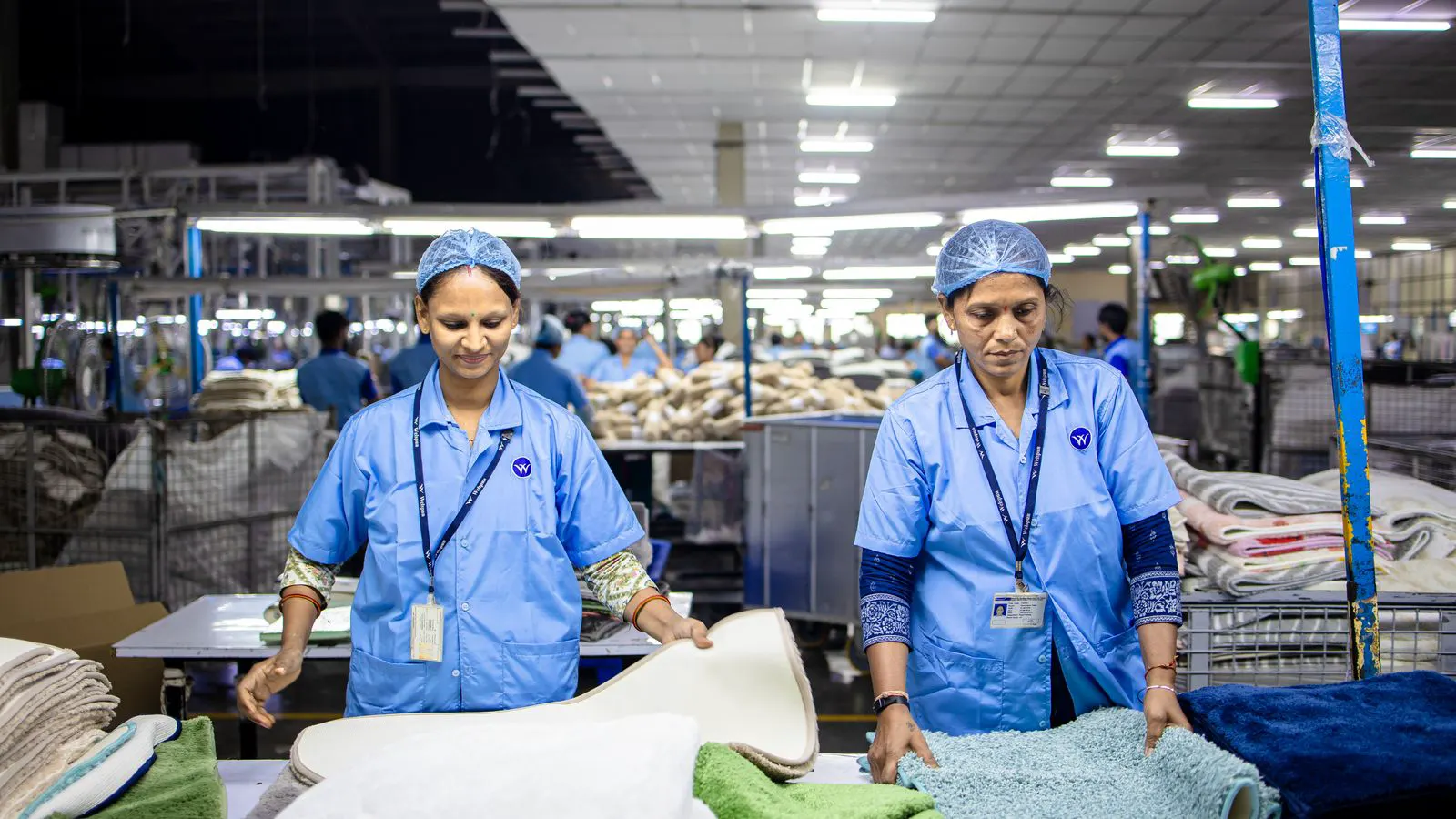
The most common reason for a high minimum order quantity is the setup required to run the production line. In home textiles, this includes cutting patterns, setting up looms, preparing printing screens, or installing special hardware for zippers and buttons.
Ask the supplier for the specific setup tasks included in the MOQ. For example, a 500-piece order of embroidered towels might require a setup time that is more efficient at 1,000 pieces. If the supplier cannot explain why the MOQ is set at a specific number, the number may be arbitrary or inflated.
Checklist:
- List the setup tasks required for the production run.
- Confirm whether the MOQ covers the full setup or just the material cut.
- Ask if the setup cost is included in the unit price or charged separately.
- Verify if the MOQ changes if you provide your own digital patterns or artwork.
Red Flags:
- The supplier gives a single MOQ without explaining the production steps.
- The MOQ jumps significantly for small design changes, suggesting inflexible processes.
- Setup costs are hidden in the unit price and are not itemized.
2. Cost Structure and Unit Pricing
The minimum order quantity directly impacts the unit price. In many home textile categories, the cost per unit decreases as the order size increases, but the relationship is not always linear. A jump from 100 units to 500 units might lower the price by 10%, but a jump from 500 to 1,000 units might lower it by only 2%.
Ask for a cost breakdown sheet that separates materials, labor, and overhead. This helps you see if the MOQ is driving up the material cost or the labor cost. If the labor cost is high relative to the material cost, the MOQ might be driven by the need to fill a shift efficiently.
Table: Common MOQ Drivers in Home Textiles
| Category | Primary MOQ Driver | Typical Red Flag |
|---|---|---|
| Knitted Fabrics | Loom setup time | High MOQ for small color runs |
| Woven Fabrics | Shuttle and warp preparation | MOQ tied to specific yarn lot sizes |
| Embroidery | Machine head changeover | Separate charge for small design sets |
| Printed Fabrics | Screen printing setup | High MOQ for complex multi-color designs |
| Finished Goods | Assembly line balance | MOQ includes packaging and labor |
Checklist:
- Request a line-item cost breakdown for the MOQ price.
- Ask how the unit price changes if you order 1.5 times the MOQ.
- Confirm if there are volume discounts or tiered pricing.
- Identify if the MOQ includes packaging, labeling, and quality inspection.
Red Flags:
- The unit price does not decrease when the order size increases beyond the MOQ.
- The supplier refuses to provide a cost breakdown.
- Hidden fees appear only when you order above the MOQ.
3. Lead Time and Production Capacity
The minimum order quantity must be matched against the supplier’s production capacity and lead time. A high MOQ that takes three months to produce is a different risk than a high MOQ that takes four weeks. For small importers, cash flow is a major constraint. A long lead time on a large MOQ ties up capital in inventory before the first sale.
Ask for the production schedule in weeks. Confirm the start and end dates. If the supplier cannot provide a realistic timeline, the MOQ may be set to match a production slot that does not align with your import planning.
Checklist:
- Get the lead time in calendar weeks, not business days.
- Confirm the start date based on your purchase order date.
- Ask if the lead time includes quality inspection and packaging.
- Check if the supplier has capacity for your order during the requested timeframe.
Red Flags:
- The lead time is vague, such as “as soon as possible.”
- The lead time is longer than the industry standard for the product type.
- The supplier cannot confirm the start date without a deposit.
4. Quality Control and Inspection Requirements
The minimum order quantity affects the number of units that can be inspected. In small orders, a high defect rate can wipe out a profit margin. In larger orders, defects are more manageable if caught early.
Ask the supplier for their quality control process. Do they inspect at the start of production, during production, and at the final stage? For small importers, a third-party inspection at the supplier’s facility is often a better investment than a full inspection at your own warehouse.
Checklist:
- Ask for the defect rate standard for the product.
- Confirm if pre-production samples are included in the MOQ cost.
- Ask if the supplier offers in-line inspection during production.
- Verify if the quality control report is provided with the shipment.
Red Flags:
- The supplier does not provide a quality control report.
- The defect rate standard is not specified.
- Pre-production samples are charged separately and are not representative of the final product.
5. Contract Terms and Flexibility
The minimum order quantity is part of the contract, but the terms around it are just as important. Ask about the deposit, the balance payment terms, and the cancellation policy. A high MOQ with a 50% deposit and a strict cancellation policy is a different risk than a high MOQ with a 10% deposit and a 30-day cancellation window.
For small importers, flexibility is key. Ask if the MOQ can be split into two shipments. This reduces the risk of holding a large amount of inventory at once. Ask if the supplier can hold materials for you if you need to delay the order.
Checklist:
- Confirm the deposit percentage and the balance payment terms.
- Ask if the MOQ can be split into two or three shipments.
- Check the cancellation policy for both the deposit and the balance.
- Ask if the supplier can hold materials for a future production run.
Red Flags:
- The deposit is non-refundable after the production starts.
- The supplier does not offer split shipments.
- The contract is in a language you do not fully understand.
6. Import Planning and Logistics
The minimum order quantity must fit into your import planning. A large MOQ might result in a full container load, which reduces the cost per unit for shipping. However, it also increases the storage cost at your warehouse.
Ask the supplier if they can pack the goods to fit your container. For example, if you are importing from Asia, a 20-foot container can hold a certain number of cubic meters of goods. If the MOQ does not fill the container, you will pay for the empty space.
Checklist:
- Ask for the packed size and gross weight of the MOQ.
- Confirm if the supplier can pack to your container specification.
- Check if the MOQ aligns with a full container load.
- Ask if the supplier offers consolidation services for smaller orders.
Red Flags:
- The packed size is not provided.
- The supplier cannot pack to your container specification.
- The MOQ is too small to fill a container, leading to high shipping costs.
7. Negotiation and Relationship Building
The minimum order quantity is a negotiation point. Do not accept the first number. Ask if the MOQ can be reduced if you pay in full upfront. Ask if the MOQ can be reduced if you provide your own materials. Ask if the MOQ can be increased if you need a longer lead time.
Building a relationship with the supplier can also help. If you are a new buyer, the supplier may be more willing to negotiate the MOQ to build your reputation. However, be cautious of suppliers who lower the MOQ but raise the unit price.
Checklist:
- Ask if the MOQ can be reduced with a full upfront payment.
- Ask if the MOQ can be reduced if you provide your own materials.
- Ask if the MOQ can be increased for a longer lead time.
- Request a written quote for the negotiated terms.
Red Flags:
- The supplier refuses to negotiate the MOQ.
- The supplier raises the unit price when you negotiate the MOQ.
- The supplier does not provide a written quote.
Final Checklist for Small Importers
Use this checklist to evaluate the minimum order quantity before placing an order. Print it out and fill it in for each supplier.
- Production: Do you understand the setup tasks and how they drive the MOQ?
- Cost: Do you have a line-item cost breakdown and a clear unit price?
- Lead Time: Is the lead time realistic and aligned with your import planning?
- Quality: Do you have a quality control process and a defect rate standard?
- Contract: Are the deposit, balance, and cancellation terms clear?
- Logistics: Does the packed size fit your container and storage needs?
- Negotiation: Have you asked for a reduction in the MOQ and a written quote?
If a supplier cannot answer these questions, walk away. A reliable supplier will welcome the questions and provide the information. A unreliable supplier will avoid the questions and provide vague answers.
The minimum order quantity is a tool, not a barrier. Use it to your advantage. By understanding the factors that drive the MOQ, you can negotiate better terms, reduce risk, and build a successful import business.
Frequently asked questions
Can I negotiate the minimum order quantity with a supplier?
Yes, but it depends on the supplier's production setup and cost structure. You can negotiate by offering a full upfront payment, providing your own materials, or increasing the lead time. Always get the negotiated terms in writing.
What is the best way to reduce the cost per unit when the MOQ is high?
Look for volume discounts or tiered pricing. Ask if the unit price decreases when you order above the MOQ. You can also reduce the cost per unit by ordering in full container loads, which lowers the shipping cost per unit.
How do I know if a supplier's MOQ is unrealistic?
Compare the MOQ with other suppliers in the same category. If the MOQ is significantly higher than the industry standard, ask for an explanation. If the supplier cannot provide a clear reason, the MOQ may be inflated.
Can I split a large MOQ into multiple shipments?
Yes, many suppliers offer split shipments. This reduces the risk of holding a large amount of inventory at once. Confirm the cost and lead time for each shipment, as there may be additional setup costs.
What should I do if the supplier refuses to provide a cost breakdown?
Be cautious. A reliable supplier should be transparent about their costs. If the supplier refuses to provide a cost breakdown, it may indicate hidden fees or a lack of professionalism. Look for another supplier.