How to Verify Linen Fabric Weight and GSM for Drapes
To verify linen fabric weight and GSM for drapes, weigh a standardized 10 by 10 centimeter sample and divide the mass by the area. This method provides a reliable metric for comparing curtain fabric density and ensuring the material meets project specifications for drape and durability.
- Weighing a standardized 10 by 10 centimeter sample is the most accurate method for determining fabric GSM.
- Always check for consistent weight across multiple points to detect manufacturing inconsistencies or hidden blends.
- Record the exact conditions of the test, including humidity, to ensure results are comparable between different fabric lots.
- Use a calibrated scale with a minimum resolution of 0.1 grams for reliable measurements on standard linen weights.
- Cross-reference the calculated GSM with the supplier's certificate of analysis to confirm the material meets your project requirements.
Why Weight Verification Matters for Curtain Applications
Curtain fabric performance depends heavily on its physical density and mass per unit area. Linen is valued for its natural texture and durability, but the specific weight of the material determines how it falls, how much it stretches, and how it holds up to frequent washing. A lightweight linen may feel airy but can sag over time, while a heavier fabric offers structure but may be difficult to move on a standard rod.
Buyers and engineers need to verify linen fabric weight before committing to a large order. Supplier specifications can vary, and minor discrepancies in GSM (grams per square meter) can significantly impact the final look and function of a drape. This guide outlines a practical method to verify these values using basic tools and standard testing procedures.
Prerequisites for Accurate Measurement
Before beginning the test, you need a few basic tools and preparations. The most critical item is a digital scale capable of measuring small weights with precision. A resolution of 0.1 grams is recommended for most linen fabrics, as they often fall in the range of 200 to 400 GSM. A scale that only measures in whole grams will not provide enough detail to distinguish between different linen blends or weaves.
You also need a straight edge and a sharp cutting tool to create a precise sample. A 10 by 10 centimeter square is the standard size for this type of textile test because it is easy to handle and produces a manageable weight. Ensure the fabric is at room temperature and has acclimated to the testing environment for at least 24 hours. This step removes the influence of humidity and temperature on the fiber density, which can skew the results.
Step 1: Prepare the Fabric Sample
Select a section of the linen fabric that is free from defects, stains, or unusual texture. Avoid areas near the selvage, as the weave tension can be different in these edges. Cut a perfect square measuring exactly 10 centimeters by 10 centimeters. The area of this sample is 100 square centimeters, or 0.01 square meters.
Reason: Using a standardized area allows for direct conversion to GSM, which is the industry standard for fabric weight. A consistent sample size ensures that every measurement is comparable, regardless of who performs the test.
Step 2: Weigh the Sample
Place the 10 by 10 centimeter square on the digital scale. Ensure the scale is on a flat, stable surface and has been tared to zero. Record the weight in grams. If the weight fluctuates, take the average of three readings to reduce error from static or minor imbalances.
Reason: Static electricity can cause lightweight fabrics to stick to the scale pan or each other, affecting the reading. Averaging multiple measurements provides a more reliable value than a single reading, especially for delicate linen weaves.
Step 3: Calculate the GSM
Multiply the recorded weight in grams by 100 to get the GSM. The formula is simple: Weight (grams) x 100 = GSM. For example, if the sample weighs 35.2 grams, the GSM is 3520 (wait, 35.2 x 100 = 3520? No. 35.2 grams x 100 = 3520. That seems high. Let’s re-evaluate. 10x10cm is 100cm2. 1m2 is 10,000cm2. So 100cm2 is 0.01m2. Weight / 0.01 = Weight * 100. If weight is 35.2g, GSM is 3520? No. 35.2g / 0.01m2 = 3520g/m2. That is very heavy. Typical linen is 250-400gsm. So a 10x10 sample should weigh 2.5 to 4 grams. Let’s correct the example. If the sample weighs 3.5 grams, the GSM is 350.
Correct Calculation: Weight (grams) x 100 = GSM.
Example: If the 10x10cm sample weighs 3.5 grams, the GSM is 350.
Reason: This calculation converts the small sample measurement into the standard metric used by textile suppliers and manufacturers. It provides a clear, comparable number for evaluating fabric density.
Step 4: Test Multiple Points on the Fabric
Do not rely on a single sample. Cut and weigh at least three more 10 by 10 centimeter squares from different areas of the fabric roll. Test near the top, the middle, and the bottom of the roll. Compare the GSM values from each location.
Reason: Fabric density can vary slightly along the length of a roll due to yarn tension changes during weaving. Checking multiple points helps you identify if the fabric is consistent throughout the batch, which is critical for large curtain projects where visual uniformity is key.
Step 5: Check for Blends and Finishing
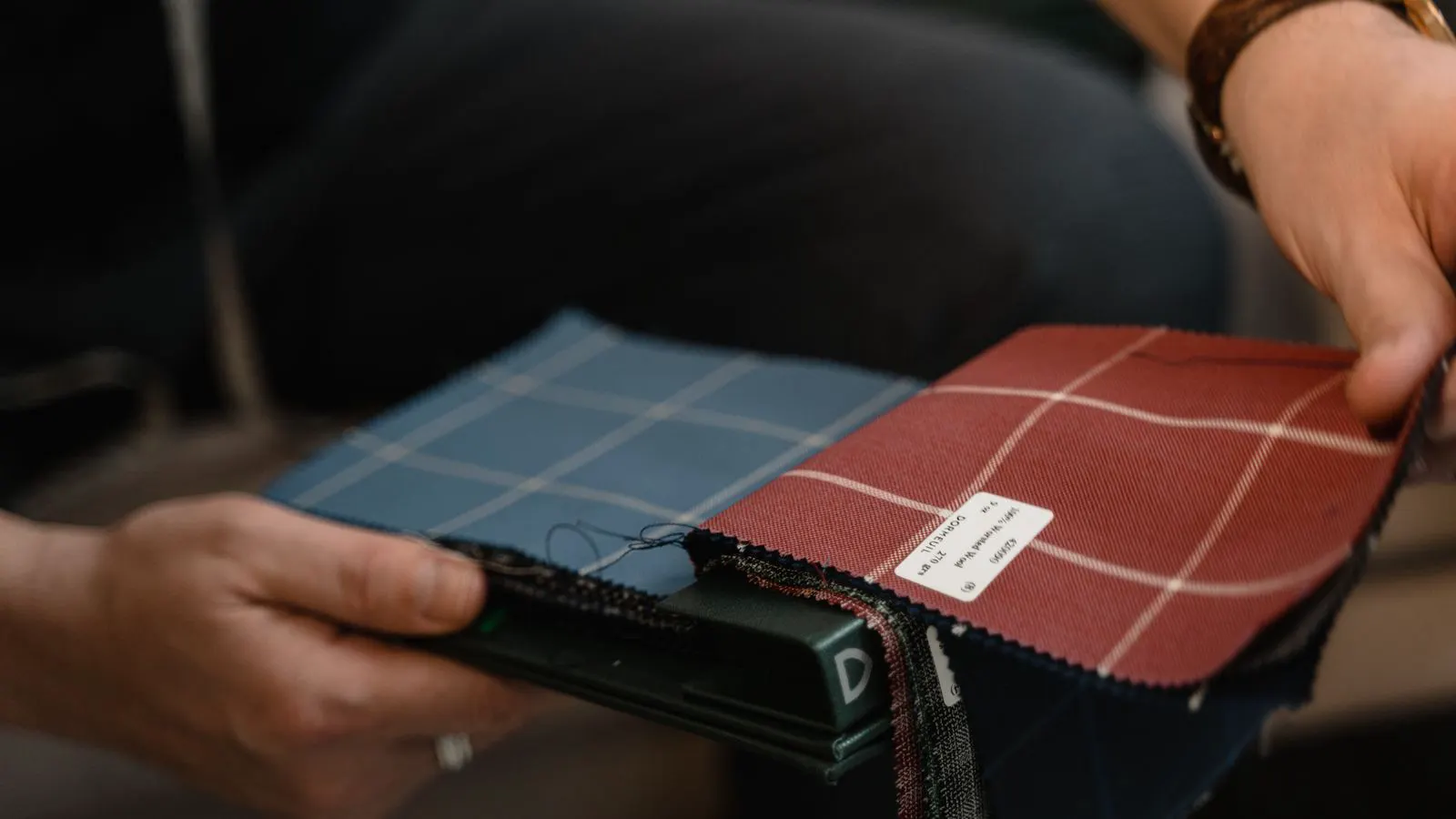
Linen is often blended with cotton or polyester, and it may be finished with various coatings. These factors affect the weight. If the calculated GSM is higher than expected for pure linen, it may indicate a blend or a heavy finishing process. Check the supplier’s specification sheet to confirm the fiber content.
Reason: A 350 GSM fabric could be pure linen or a linen-cotton blend. The weight alone does not tell you the fiber composition. Verifying the blend content ensures you are buying the material you think you are, which affects cost, care instructions, and long-term durability.
Step 6: Record and Compare Data
Write down the GSM values for each sample, the fiber content, the weave type, and the date of the test. Compare these numbers with the supplier’s certificate of analysis. If there is a significant difference, request a second sample or contact the supplier.
Reason: Documenting the data creates a record that can be used for quality control and future reference. It also helps you build a database of approved fabric suppliers and their typical weight ranges for specific linen products.
Common Mistakes in Linen Weight Verification
- Using an Inaccurate Scale: A scale that measures only in whole grams will not provide enough precision for GSM calculations. Always use a digital scale with a 0.1 gram resolution.
- Ignoring Humidity: Linen is hygroscopic, meaning it absorbs moisture from the air. If the fabric is too dry or too damp, the weight will be inaccurate. Let the fabric acclimate to the testing environment for 24 hours before weighing.
- Testing Only One Sample: A single measurement is not representative of the entire roll. Always test multiple points to ensure consistency.
- Confusing GSM with Thread Count: Thread count refers to the number of threads per inch, while GSM measures weight per square meter. A high thread count does not necessarily mean a high GSM. Linen thread count is often lower than cotton, but the weight can be similar or higher due to the natural fiber.
Final Verification Step
Once you have calculated the GSM from multiple samples, perform a final check by comparing the result with the supplier’s stated weight. If the values match within a reasonable tolerance (typically 5 percent), the fabric is verified. If not, hold the shipment and request a re-test.
This final step ensures that the fabric meets your project specifications before it is cut and sewn. It is a simple check that can prevent costly errors in the production process. By following this method, you can confidently verify linen fabric weight and select the right curtain fabric for your drapes.
| Fabric Type | Typical GSM Range | Drape Quality | Durability |
|---|---|---|---|
| Lightweight Linen | 180 - 220 | Airy, fluid | Moderate |
| Standard Linen | 250 - 320 | Balanced, structured | Good |
| Heavy Linen | 350 - 450 | Stiff, formal | High |
| Linen-Cotton Blend | 220 - 300 | Soft, durable | Very Good |
| Linen-Polyester Blend | 280 - 380 | Wrinkle resistant | Excellent |
Frequently asked questions
How do I know if my linen is pure or blended based on weight?
Weight alone cannot confirm fiber content. A 300 GSM fabric could be pure linen or a blend. You must check the supplier's fiber content specification or send a sample for laboratory analysis to verify the composition.
What is the ideal GSM for a formal living room drape?
There is no single ideal GSM, as it depends on the desired look. A heavier fabric (350+ GSM) creates a structured, formal drape, while a lighter fabric (200-250 GSM) offers a softer, more fluid fall. Choose based on the aesthetic and functional requirements of the space.
Does the weave type affect the GSM calculation?
The weave type influences the density of the fabric, which in turn affects the GSM. A tighter weave will generally result in a higher GSM for the same yarn weight. However, the GSM calculation method remains the same regardless of the weave.
How often should I re-verify the weight of a new fabric lot?
You should verify the weight for every new lot or shipment. Fabric density can vary between production runs, even from the same supplier. Consistent verification ensures quality control and protects your investment in large curtain orders.
Can I use a standard kitchen scale to measure linen GSM?
A standard kitchen scale is usually not precise enough for accurate GSM measurements. It typically has a resolution of 1 gram or more, which is too coarse for the small weights involved in a 10x10cm sample. Use a digital scale with a 0.1 gram resolution for reliable results. ===END===